
Best Solar Cleaning Brushes in Coimbatore for Consistent Solar Output
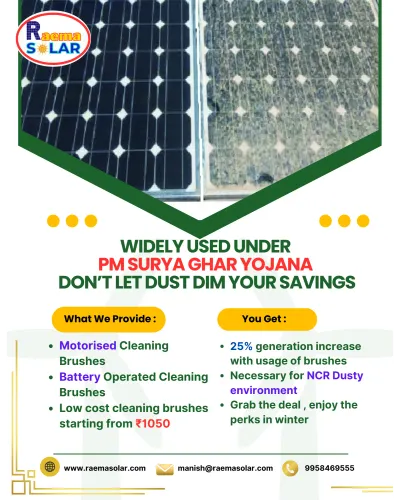
The problem is simple: dirty panels generate less power 📉
For residential rooftop solar systems and industrial installations in Coimbatore, the equation is straightforward.
Dirty panels → lower sunlight absorption → reduced power output → financial loss.
This is not a theoretical issue. It is a daily operational reality across Coimbatore’s homes, textile units, warehouses, and sheds. Solar systems are installed with a clear ROI expectation, but when cleaning is irregular or ineffective, that ROI quietly erodes.
Why this issue is specific to Coimbatore
In Coimbatore’s textile and industrial environment, solar panels are exposed to conditions that accelerate performance loss:
- Fine dust carried by steady airflow
- Textile lint and industrial residue in industrial zones
- Dry summer heat that bonds dust to glass surfaces
- Light rain that creates sticky residue instead of cleaning panels
Unlike heavy monsoon regions, Coimbatore does not receive rainfall strong enough to wash panels clean. Instead, rain often spreads existing dust into a thin film, making panels harder to clean later.
For residential rooftops in areas like Saravanampatti or Ganapathy, the issue is similar. Open plots, road dust, and continuous airflow ensure panels accumulate dust quickly, even when they appear visually “acceptable.”
Cause and effect: how dirty panels impact power generation
The mechanism is well understood from an engineering standpoint.
Solar panels rely on unobstructed sunlight reaching the glass surface. When dust and residue accumulate:
- Light transmission reduces
- Panel temperature increases
- Inverter output drops
- Daily unit generation becomes inconsistent
In practical terms, a system expected to generate 100 units per day may start producing only 80–85 units. Over a month, this loss compounds into a significant financial impact, especially for textile units and factories operating on thin margins.
Local case example from Coimbatore
In a textile unit near Peelamedu, two similar rooftop solar installations operated under identical sunlight conditions.
- One unit followed irregular manual cleaning
- The other adopted scheduled cleaning using proper solar cleaning brushes
Over a monitored period, the regularly cleaned installation produced 15–20% higher daily output. The difference was consistent, not occasional.
Similarly, a residential rooftop near Saravanampatti showed visible improvement in daily units once the homeowner moved from occasional water-based cleaning to structured brush-based maintenance. The inverter data confirmed better stability and reduced fluctuations.
These are observational outcomes, not marketing claims. The cause-and-effect relationship is clear and measurable.
Why manual or water-based cleaning fails
Many solar owners rely on traditional methods:
- Water pipes
- Cloth wiping
- Occasional cleaning by untrained labor
These approaches create multiple problems:
- Micro-scratches on glass surfaces
- Uneven cleaning across panel rows
- High water usage without effective residue removal
- Safety risks on rooftops
Once micro-scratches form, dust adheres faster, making future cleaning less effective. Over time, the panel’s ability to recover original efficiency diminishes.
Why solar cleaning brushes are the reliable solution
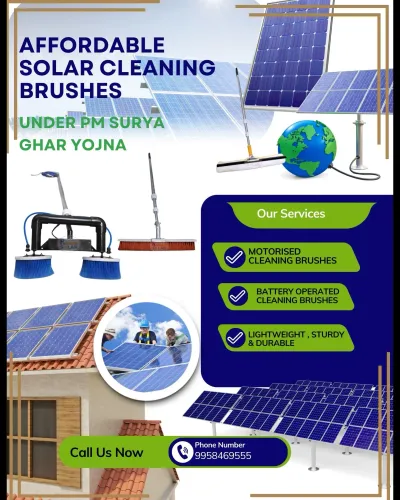
Solar cleaning brushes are designed specifically for panel glass and operating environments like Coimbatore’s.
A proper solar cleaning brush:
- Removes fine dust and industrial residue safely
- Prevents glass scratching
- Enables dry or minimal-water cleaning
- Ensures uniform cleaning across large rooftops
- Maintains consistent power output
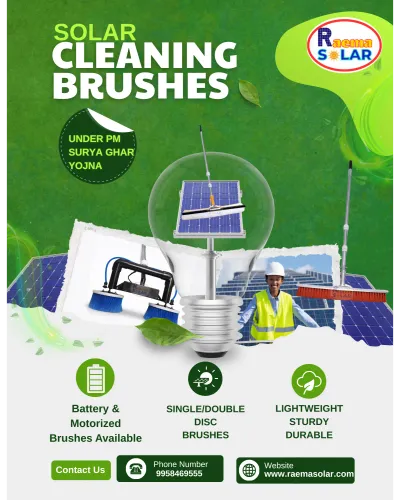
For industrial rooftops and textile factories, motorized or battery-operated solar cleaning brushes reduce manpower dependency while improving cleaning speed and coverage.
For residential rooftops, manual or lightweight motorized brushes provide safe, controlled cleaning without climbing risks or glass damage.
Residential and industrial relevance
For homeowners:
Regular brush-based cleaning restores expected daily units and protects long-term savings.
For textile units and warehouses:
Consistent cleaning stabilizes output, improves ROI predictability, and shortens payback periods.
For EPCs and facility managers:
Brush-based systems standardize maintenance, reduce callbacks, and improve system performance metrics.
As one of the largest solar cleaning brush manufacturers, our experience across Coimbatore installations shows that cleaning equipment choice directly influences long-term system performance.
Frequently asked questions
How often should solar panels be cleaned in Coimbatore?
Typically every 7–10 days during dry seasons, and more frequently near industrial zones.
Does rain clean solar panels effectively?
No. Light rain often leaves residue that reduces efficiency further.
Can cleaning damage solar panels?
Yes, if improper tools or cloth-based methods are used.
Are solar cleaning brushes suitable for large rooftops?
Yes. Motorized and battery-operated brushes are designed for industrial-scale cleaning.
Is the investment in cleaning equipment justified?
Yes. The recovered power output often offsets the equipment cost within months.
Internal Linking Suggestions
- Rooftop solar maintenance best practices
- Industrial solar ROI optimization guide
- Safe solar panel cleaning methods
What to do next ⚡
If solar panels in Coimbatore are not being cleaned regularly and correctly, power generation is already compromised. The loss may not be visible daily, but it reflects clearly in monthly output and financial returns.
Speak to our sales team today to select the right solar cleaning brush based on your rooftop size and application. Get clear guidance on pricing, usage, and maintenance schedules.
Keywords