
Introduction: The Common Reason Solar Output Drops in Rajkot
In Rajkot, rooftop solar has become a practical investment for both homes and small-to-mid-sized industries. The expectation is simple: stable daily generation and predictable savings over the years.
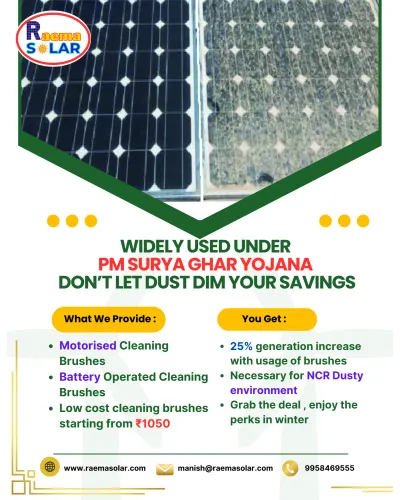
However, many solar owners in Rajkot notice a steady drop in daily units after the initial months. The panels are intact. The inverter shows no fault. Yet the output does not match projections. In most cases, the issue is not electrical. It is environmental. Dirty solar modules in Rajkot directly reduce power generation and long-term return on investment. 📉
Why This Issue Is Severe in Rajkot
Rajkot operates under hot and dry climatic conditions for most of the year. Airborne dust is a constant presence, especially around industrial and semi-urban zones.
Key local factors affecting solar modules include:
- Dry weather with minimal natural cleaning from rain
- Fine dust carried by wind across residential and industrial areas
- Industrial residue from workshops and manufacturing clusters
- High surface temperatures that cause dust to bond with module glass
For residential and industrial rooftop solar systems in Rajkot, these conditions mean that dust accumulation is not occasional. It is daily.
Problem → Cause → Solution → Result
Problem
Solar systems gradually generate fewer units than expected.
Cause
In Rajkot’s dry, dust-prone environment, fine particles settle on solar modules every day. Heat bakes this dust layer onto the glass surface. Rainfall, when it occurs, spreads dirt unevenly rather than cleaning the panels.
Solution
Planned and regular cleaning using solar module cleaning brushes designed for dry and industrial environments.
Result
Improved light transmission, stable daily power generation, and better long-term system efficiency.
This pattern is observed across residential rooftops and factory installations in Rajkot.
How Much Power and Financial Loss Occurs in Rajkot?
Based on on-ground performance observations:
- Residential systems can lose 1–2 units per day due to dust buildup
- Industrial rooftops experience higher absolute losses due to larger system sizes
- Over a year, this loss directly delays payback and reduces expected savings
Because the decline happens gradually, many owners recognize the issue only when comparing monthly or annual generation data.
Local Case Study: Factory Rooftop in Metoda GIDC
A small manufacturing unit operating in Metoda GIDC installed a rooftop solar system to control energy costs. Cleaning was irregular and mostly limited to occasional water washing.
Before structured cleaning:
- Dust layer visible within a week
- Uneven daily power generation
- Month-on-month reduction in output
Action taken:
The unit introduced regular cleaning using solar module cleaning brushes suited for dry industrial rooftops.
After consistent brush-based cleaning:
- 15–20% improvement in power generation
- Stable daily units even during peak summer months ⚡
- Reduced cleaning effort and safer maintenance practices
The system hardware remained unchanged. The performance improvement came solely from better cleaning discipline.
Why Manual or Water-Based Cleaning Fails in Rajkot
Manual cleaning is still common in Rajkot, but it often causes more harm than benefit in dusty conditions.
Typical problems include:
- Micro-scratches caused by dust particles dragged across glass
- Uneven cleaning leaving behind residue streaks
- High water usage without effective dust removal
- Safety risks on factory rooftops and sloped residential installations
Over time, scratched surfaces attract more dust, accelerating efficiency loss.
Why Solar Module Cleaning Brushes Are the Most Effective Solution
Solar module cleaning brushes are engineered to remove fine dust without damaging the glass surface.
For Rajkot’s dry and industrial environment, their effectiveness lies in controlled pressure and soft bristles that lift dust instead of grinding it into the panel.
Key advantages include:
- Protection of module glass integrity
- Uniform cleaning across large panel arrays
- Options for manual, motorized, and battery-operated use
- Faster cleaning cycles for factories and warehouses
For industrial solar module cleaning in Rajkot, brush-based systems deliver consistent, repeatable results.
How Often Should Solar Panels Be Cleaned in Rajkot?
Cleaning frequency depends on exposure and usage:
- Residential rooftops: every 2–4 weeks
- Industrial rooftops: more frequent, based on dust load
- Workshops and warehouses: scheduled cleaning is essential
Regular cleaning prevents dust bonding, controls thermal stress, and preserves long-term performance.
Long-Term Asset Protection and ROI Logic
Solar installations in Rajkot are long-term financial assets. Their success depends on sustained output over decades.
Consistent cleaning using proper brushes:
- Preserves daily and annual generation
- Prevnts surface damage
- Stabilizes ROI calculations
- Protects the value of the solar investment
From an engineering and financial perspective, cleaning is a performance safeguard, not an optional task.
Brand Positioning
As one of the largest solar cleaning brush manufacturers, the brand is trusted by homeowners, small and mid-sized industries, manufacturing units, and EPC partners. The products are designed specifically for Indian dry and industrial environments where dust control directly impacts solar performance.
Best Solar Module Cleaning in Rajkot | Improve Solar Output & ROI
Looking for the best solar module cleaning in Rajkot? Learn how dust and heat reduce solar output and why cleaning brushes deliver consistent results. Call today for pricing.
- Rooftop solar maintenance best practices
- How to choose the right solar cleaning brush for factories
- Solar O&M planning for dry-climate regions
If your solar modules in Rajkot are not being cleaned regularly, daily power generation is already compromised. Speak with our sales team today to choose the right solar module cleaning brush based on your rooftop size and usage. Proper cleaning protects output, ROI, and the long-term value of your solar investment. ☀️
Keywords