Introduction: When Solar Performance Drops Without Any Warning Signs
In Ahmedabad, rooftop solar is no longer limited to industries. It is now common across homes in Bopal and Satellite, commercial buildings near SG Highway, and factories in Vatva and Sanand.
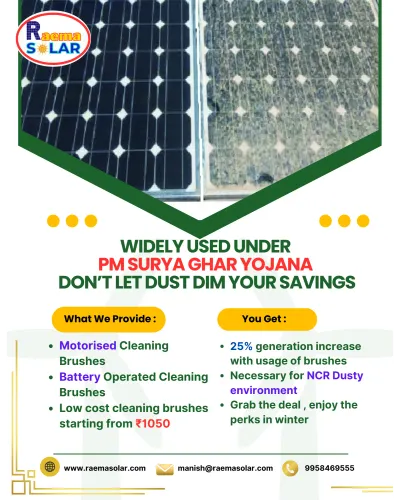
Most system owners expect stable generation once the system is installed. However, after a few months, daily output starts dropping slightly. There are no alerts. No visible faults. Still, energy production declines. In Ahmedabad, this is rarely an electrical issue. It is environmental. Dirty solar modules directly reduce daily power output and gradually impact long-term return on investment. 📉
Why This Issue Is More Noticeable in Ahmedabad
Ahmedabad’s rapid urban expansion plays a major role in solar performance. Construction sites, road dust, and industrial activity continuously release fine particles into the air.
Key contributing factors include:
- Continuous construction activity across developing areas like Gota and Bopal
- Dry climate with minimal natural cleaning
- Urban dust from traffic and infrastructure projects
- High temperatures that cause dust to stick to module glass
In Ahmedabad’s dry, dust-heavy urban and industrial environment, panels don’t just collect dust—they develop a thin layer that reduces sunlight penetration.
Problem → Cause → Solution → Result
Problem
Solar systems generate fewer units than expected over time.
Cause
Fine dust from construction and urban activity settles on panels daily. Heat causes this dust to bond tightly to the glass surface. Rainfall, when it occurs, spreads the dust instead of removing it completely.
Solution
Regular cleaning using solar module cleaning brushes designed for dry and construction-heavy environments.
Result
Improved light absorption, stable daily generation, and consistent long-term system performance.
This pattern is consistently observed across residential and industrial rooftops in Ahmedabad.
How Much Power and Financial Loss Occurs in Ahmedabad?
From practical rooftop observations:
- Residential systems lose around 1–2 units per day due to dust buildup
- Commercial and factory rooftops experience higher losses due to larger capacity
- Over time, this leads to delayed payback and reduced overall savings
Because the drop is gradual, many system owners only recognize the loss after long-term performance comparison.
Local Case Study: Residential Rooftop in Bopal
A residential solar system in Bopal was installed to reduce monthly electricity bills. Cleaning was done occasionally using water.
Before structured cleaning:
- Dust layer forming within a few days
- Slight but consistent drop in daily units
- Reduced monthly energy output
Action taken:
The homeowner introduced regular cleaning using solar module cleaning brushes suited for residential rooftops.
After consistent brush-based cleaning:
- 15–20% improvement in power generation
- More stable daily unit output ⚡
- Reduced effort and faster cleaning process
No changes were made to the system. The improvement came purely from better cleaning practices.
Why Manual Cleaning and Water Washing Are Not Reliable
Manual cleaning methods often seem convenient but are not effective in Ahmedabad’s conditions.
Common issues include:
- Dust getting dragged across glass, causing micro-scratches
- Uneven cleaning leaving residue layers
- Excessive water use without proper dust removal
- Difficulty cleaning large rooftops consistently
Over time, these issues reduce panel efficiency further instead of improving it.
Why Solar Module Cleaning Brushes Are the Most Effective Solution
Solar module cleaning brushes are designed specifically for environments like Ahmedabad where dust is fine, frequent, and sticky.
Their effectiveness comes from:
- Soft bristles that lift dust instead of spreading it
- Even cleaning across the entire panel surface
- Faster cleaning for large rooftops
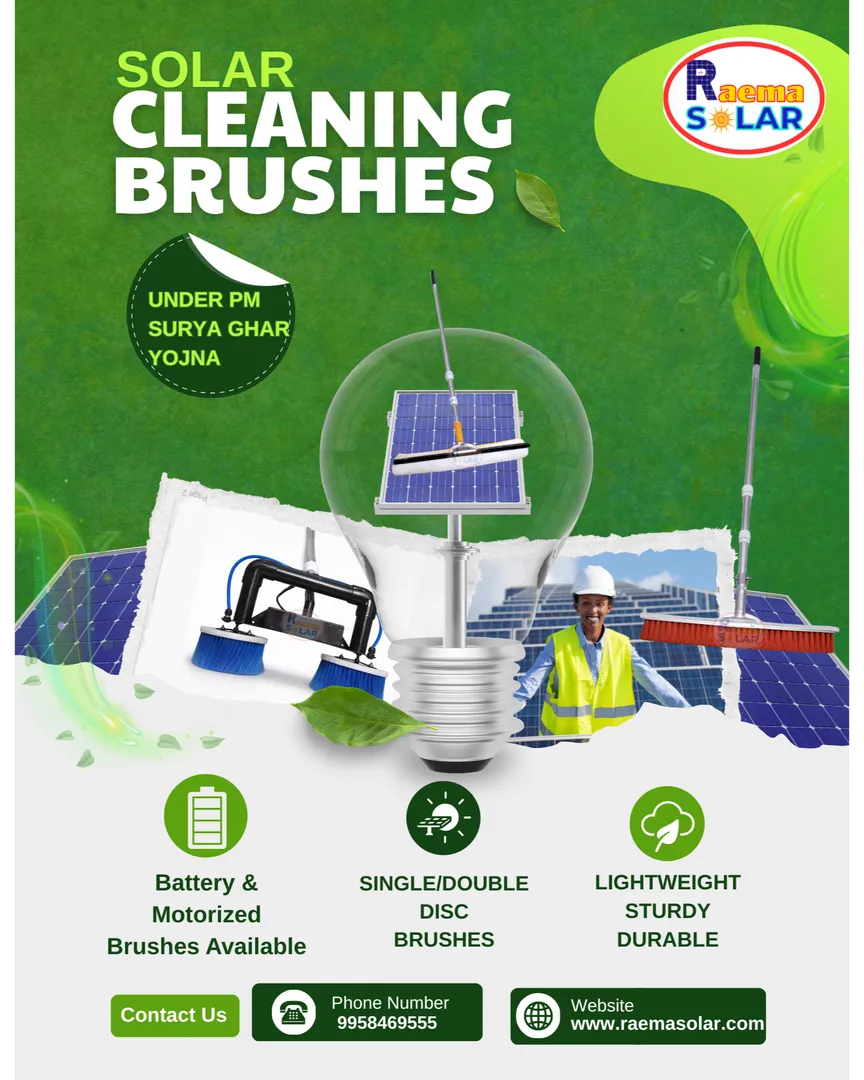
- Options including manual, motorized, and battery-operated systems
For industrial solar module cleaning in Ahmedabad, brush-based cleaning ensures consistent performance and better output recovery.
How Often Should Solar Panels Be Cleaned in Ahmedabad?
Cleaning frequency depends on exposure:
- Residential rooftops (Bopal, Satellite): every 2–4 weeks
- Commercial buildings: based on surrounding construction activity
- Industrial units (Vatva, Sanand): more frequent scheduled cleaning
Regular cleaning prevents dust buildup and maintains system efficiency.
Keywords