
Introduction: Why Solar Output in Rewa Drops Without Any Technical Fault
In Rewa, solar energy has become a major part of the power ecosystem. Beyond utility-scale solar parks, rooftop systems are increasingly installed on homes, commercial buildings, schools, and warehouses.
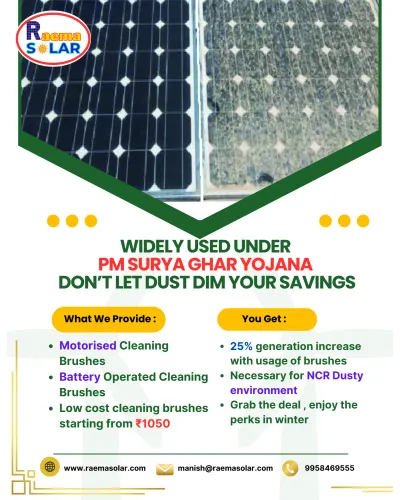
Yet many rooftop solar owners notice a steady drop in daily generation within months of installation. The inverter shows no warning. Panels look fine. Still, output declines. In Rewa, this is rarely an electrical issue. It is environmental. Dirty solar modules directly reduce daily power output and gradually weaken long-term return on investment. 📉
Why This Issue Is Severe in Rewa
Rewa experiences extended dry periods, especially outside the monsoon season. Rural and semi-urban surroundings contribute airborne dust from open land, roads, and construction. Fine particles settle on rooftop solar panels daily.
Environmental contributors include:
- Dry climate for much of the year
- Dust from roads and open land areas
- High summer temperatures bonding dust to module glass
- Limited rainfall that does not effectively wash panels
In Rewa’s dry and dust-prone environment, rooftop solar systems accumulate a thin but persistent dust layer that blocks sunlight transmission.
Problem → Cause → Solution → Result
Problem
Solar systems produce fewer units than projected despite adequate sunlight.
Cause
Fine dust settles on module glass daily. Heat hardens this layer, reducing light penetration to photovoltaic cells. Occasional rain spreads the dust unevenly rather than removing it.
Solution
Planned and regular cleaning using solar module cleaning brushes specifically designed for dry climates.
Result
Improved light absorption, stable daily output, and predictable long-term performance.
This cause-and-effect cycle is visible across residential and commercial rooftops in Rewa.
How Much Power and Financial Loss Occurs in Rewa?
Based on rooftop performance patterns:
- Residential systems can lose 1–2 units per day due to dust buildup
- Commercial rooftops face higher absolute losses because of larger capacity
- Over a year, this loss significantly delays ROI and reduces projected savings
Because the drop is gradual, many owners underestimate its financial impact until annual performance reviews are conducted.
Local Case Study: Commercial Rooftop Near Sirmour Road
A commercial building near Sirmour Road installed a rooftop solar system to offset daytime grid consumption. Cleaning was irregular and limited to occasional manual water washing.
Before structured cleaning:
- Dust accumulation visible within days
- Fluctuating daily output
- Gradual monthly decline in generation
Action taken:
The building adopted scheduled cleaning using solar module cleaning brushes suited for dry and semi-urban conditions.
After consistent brush-based cleaning:
- 15–20% improvement in power generation
- Better consistency in daily units ⚡
- Reduced cleaning time and safer rooftop operations
No technical modifications were made. Performance improved purely through structured cleaning.
Why Manual or Water-Based Cleaning Is Ineffective in Rewa
Manual cleaning methods often create long-term surface issues:
- Micro-scratches from dragging dust across glass
- Uneven cleaning leaving streaks
- High water usage with limited dust removal
- Increased long-term abrasion of module surface
Scratched glass surfaces attract more dust, accelerating efficiency loss.
Why Solar Module Cleaning Brushes Deliver Reliable Results
Solar module cleaning brushes are engineered to remove fine dust without damaging the module surface.
Their effectiveness lies in:
- Soft bristles that lift dust rather than grind it
- Uniform cleaning pressure across panel surfaces
- Efficient cleaning across both small and large rooftops
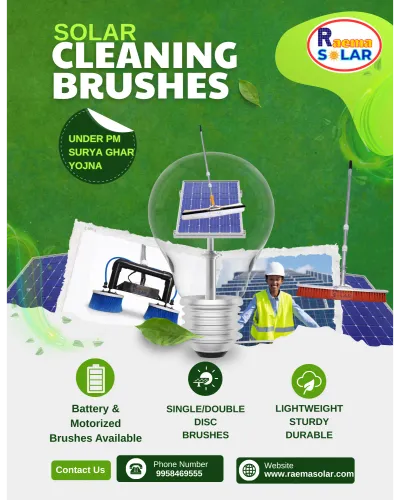
- Availability in manual, motorized, and battery-operated options
For commercial solar module cleaning in Rewa, brush-based systems provide consistent and repeatable performance improvement.
How Often Should Solar Panels Be Cleaned in Rewa?
Cleaning frequency depends on exposure:
- Residential rooftops: every 3–4 weeks
- Commercial buildings: more frequent during peak summer
- Larger installations: scheduled maintenance is essential
Regular cleaning prevents dust bonding, reduces thermal stress, and preserves long-term system efficiency.
Engineering Logic and Long-Term ROI Protection
Solar installations in Rewa are long-term financial assets. Their performance depends on stable energy generation over decades.
Consistent brush-based cleaning:
- Maintains optimal sunlight absorption
- Prevents surface abrasion
- Stabilizes ROI calculations
- Protects long-term asset value
From both engineering and financial perspectives, cleaning is a performance safeguard, not an optional task.
Brand Positioning
As one of the largest solar cleaning brush manufacturers, the brand is trusted by homeowners, commercial buildings, and EPC partners. The products are designed specifically for Indian dry and dust-prone environments where surface cleanliness directly impacts solar efficiency.
Keywords