Introduction: When Solar Systems Underperform Without Any Visible Damage
In Surat, solar installations have become a standard investment across homes, textile units, and industrial rooftops. With strong sunlight and high electricity consumption, solar systems are expected to deliver consistent daily output.
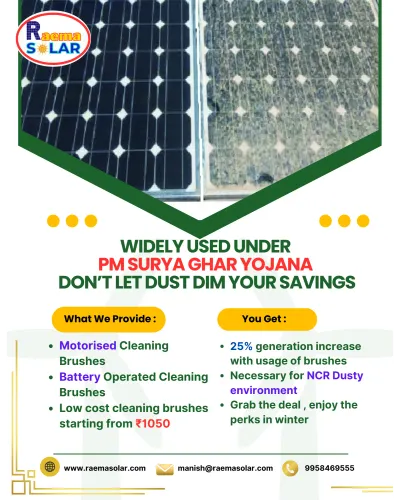
Yet many system owners begin noticing something subtle. Generation starts dipping slightly. There are no visible faults. No inverter issues. Still, numbers don’t match expectations. In Surat, this is not uncommon. Dirty solar modules directly reduce daily power output and gradually affect long-term ROI. 📉
Why This Issue Is More Critical in Surat Than It Appears
Surat’s environment is different from typical urban cities. The presence of textile processing units, dyeing facilities, and industrial zones adds a unique layer of airborne residue.
Key contributing factors include:
- Fine textile fibers and chemical residue in the air
- Continuous industrial dust from Pandesara GIDC, Sachin GIDC, and Udhna
- Dry weather that prevents natural cleaning
- Heat that causes dust to stick firmly to module glass
In Surat’s dry, dust-heavy industrial environment, solar panels don’t just get dusty—they develop a thin film that reduces light absorption efficiency.
Problem → Cause → Solution → Result
Problem
Solar systems generate fewer units than expected, even under strong sunlight.
Cause
Fine textile and industrial particles settle daily on module surfaces. Due to heat, this layer bonds tightly with the glass. Unlike loose dust, this residue does not get removed easily by wind or rain.
Solution
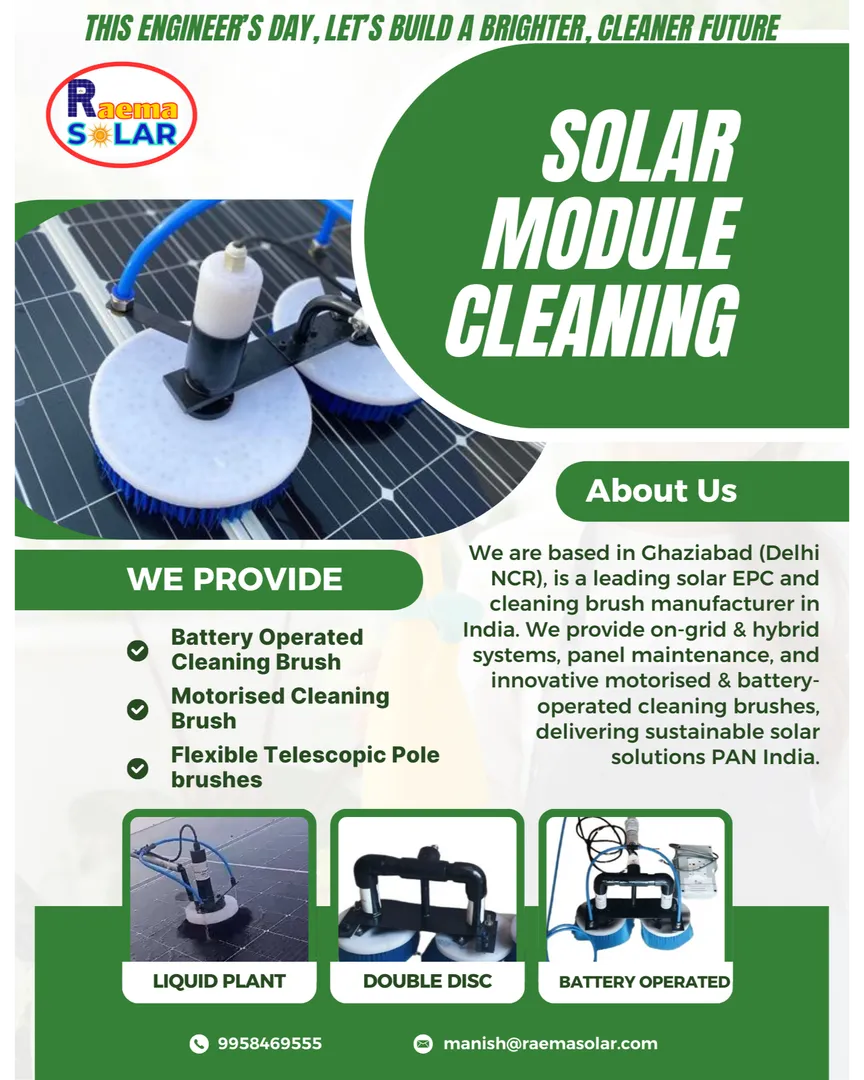
Regular cleaning using solar module cleaning brushes designed to remove bonded dust and residue without damaging the panel surface.
Result
Restored light absorption, stable daily energy generation, and improved long-term system performance.
This pattern is consistently seen across residential rooftops and textile units in Surat.
How Much Power and Financial Loss Occurs in Surat?
Based on practical rooftop observations in areas like Adajan, Vesu, and Varachha:
- Residential systems lose approximately 1–2 units per day due to dust accumulation
- Industrial rooftops experience significantly higher unit loss due to larger system sizes
- Over a year, this leads to noticeable delays in payback and reduced overall savings
Since the drop is gradual, many system owners only realize the loss after comparing long-term data.
Local Case Study: Textile Unit in Sachin GIDC
A textile unit in Sachin GIDC installed rooftop solar to manage operational electricity costs. Cleaning was done occasionally using water.
Before structured cleaning:
- Fine residue layer forming within days
- Irregular daily unit generation
- Gradual drop in monthly performance
Action taken:
The unit implemented scheduled cleaning using solar module cleaning brushes suitable for industrial rooftops.
After consistent brush-based cleaning:
- 15–20% improvement in power generation
- Stable and predictable daily units ⚡
- Reduced cleaning effort and faster turnaround
No system upgrade was done. Performance improved purely through effective cleaning.
Why Manual Cleaning and Water Washing Fail in Surat
Many system owners rely on manual cleaning or water washing, but these methods are not suitable for Surat’s environment.
Common issues include:
- Residue not fully removed, leaving a thin film
- Micro-scratches caused by wiping dust across glass
- Excessive water usage without effective cleaning
- Inconsistent cleaning across large rooftops
Over time, these methods can reduce panel efficiency further instead of improving it.
Why Solar Module Cleaning Brushes Are the Most Effective Solution
Solar module cleaning brushes are specifically designed for environments like Surat where dust is fine, sticky, and continuous.
Their effectiveness comes from:
- Soft bristles that lift residue without damaging glass
- Uniform cleaning across the entire panel surface
- Ability to clean large rooftops efficiently
- Options for manual, motorized, and battery-operated systems
For industrial solar module cleaning in Surat, brush-based cleaning is not just effective—it is necessary for maintaining consistent output.
How Often Should Solar Panels Be Cleaned in Surat?
Cleaning frequency depends on location and exposure:
- Residential rooftops (Adajan, Vesu): every 2–4 weeks
- Textile and industrial rooftops (Sachin GIDC, Pandesara): more frequent cleaning required
- Large installations: structured cleaning schedules are essential
Regular cleaning prevents residue buildup and maintains consistent system performance.
Engineering Perspective: Cleaning Is Not Maintenance, It Is Performance Control
Solar panels work by allowing maximum sunlight to reach photovoltaic cells. Any obstruction, even a thin dust layer, reduces efficiency.
From an engineering standpoint:
- Reduced light → Reduced current generation
- Lower generation → Lower financial return
- Continued neglect → Long-term efficiency degradation
This makes cleaning a critical part of system performance, not just maintenance.
Brand Positioning
As one of the largest solar cleaning brush manufacturers, the brand is trusted across Surat by homeowners, textile industries, manufacturing units, and EPC partners. The products are designed specifically for Indian industrial and dry environments where dust and residue directly impact solar efficiency.
Meta Title
Best Solar Module Cleaning in Surat | Improve Solar Output & ROI
Meta Description
Searching for the best solar module cleaning in Surat? Learn how textile dust reduces solar efficiency and why cleaning brushes deliver consistent results. Call now for pricing.
Internal Linking Suggestions
- Solar maintenance strategies for textile industries
- How to choose the right solar cleaning brush for large rooftops
- Solar O&M planning for industrial environments
High-Impact CTA Copy
If your solar modules in Surat are exposed to textile dust and are not being cleaned regularly, your daily power generation is already dropping. Speak with our sales team today to select the right solar module cleaning brush based on your rooftop size and industry type. Proper cleaning directly protects your output, ROI, and long-term solar performance. ☀️
Keywords